
GS1 Sunrise 2027: 2D Barcode Guide for Brands
GS1 Sunrise 2027: What the 2D Barcode Deadline Means for Your Business
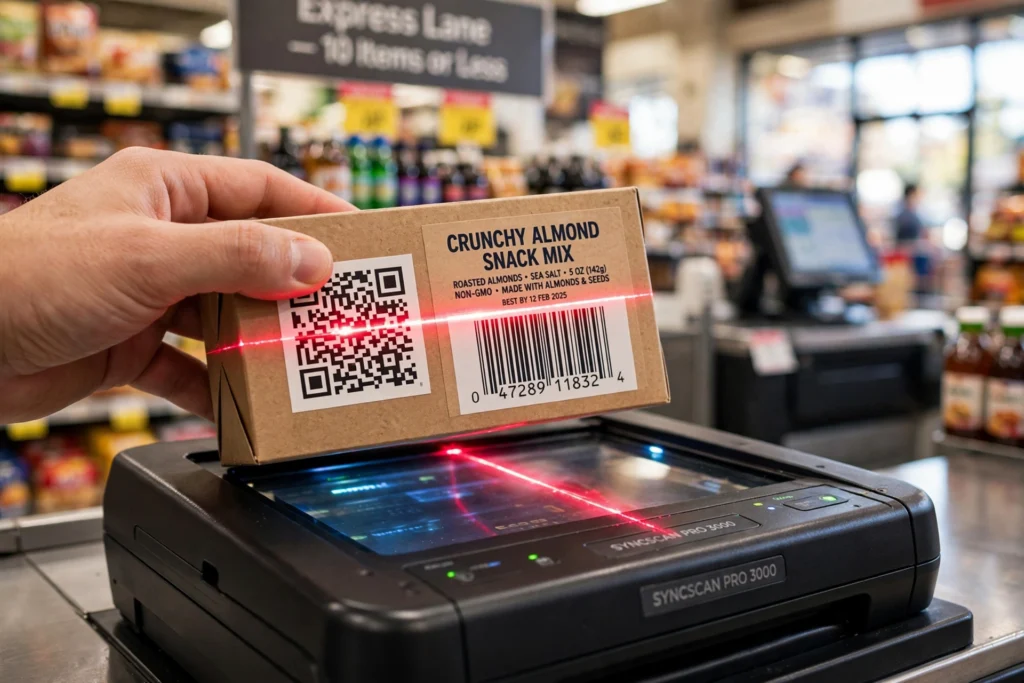
By the end of December 2027, retail point-of-sale systems around the world are expected to be able to scan and process two-dimensional (2D) barcodes, not just the one-dimensional UPC and EAN stripes we have used for decades. This industry-wide readiness milestone is called GS1 Sunrise 2027, and it matters to every brand owner, seller, and packaging designer who sells through retail checkout. It is not a law, and it is not a ban on 1D barcodes, but it does change what your packaging needs to carry. (GS1’s official Sunrise 2027 page)
In this guide you will learn exactly what Sunrise 2027 requires, how GS1 Digital Link makes one code work for both scanners and smartphones, whether you can keep your existing UPC, what steps brands should take now, and how to add 2D codes to your packaging in bulk without slowing down production.
What Sunrise 2027 actually requires (and what it does not)
The date at the center of everything is December 31, 2027. By then, the goal is that retail POS systems can read 2D barcodes such as GS1 DataMatrix and QR codes carrying GS1 Digital Link data. The emphasis is on capability: systems must be able to read 2D codes. GS1 US has been clear that businesses do not need every 2D capability live on day one. Think of it as a readiness milestone the whole industry is moving toward together.
What Sunrise 2027 is NOT:
- It is not a law or government regulation. It is a GS1 industry initiative.
- It does not ban 1D barcodes. UPC and EAN symbols continue to be accepted at checkout after 2027, and no retirement date for them has been set.
- It does not require you to remove the linear barcode from your packaging.
- Outside the United States, the same program runs under the name Ambition 2027, so if you sell internationally, watch for both names.
The practical question for brands is not whether 1D codes stop working. They do not. The question is whether your packaging carries a 2D symbol that upgraded scanners can read, so your products are ready as more and more checkouts gain the capability. Retailers representing roughly 50 million SKUs are moving through this transition, which makes dual marking the smart, low-risk path forward.
What is GS1 Digital Link? One code, two readers
The 2D symbol most brands will print is a QR code or Data Matrix built on GS1 Digital Link, a standardized URI (web address) format defined in the GS1 Digital Link URI Syntax specification (current version 1.7.0). It looks like an ordinary web link, but it is structured so machines can read it precisely:
https://example.com/01/09506000134352
In that address, /01/ is the GS1 application identifier for the GTIN, the global product number behind your UPC or EAN. More data can follow: /10/ for batch or lot number, /21/ for serial number, and expiry date as a query parameter.
This is where the “one code, two readers” idea comes from:
- At checkout, the POS scanner reads the same symbol, extracts the GTIN, and rings up the item exactly like a traditional barcode.
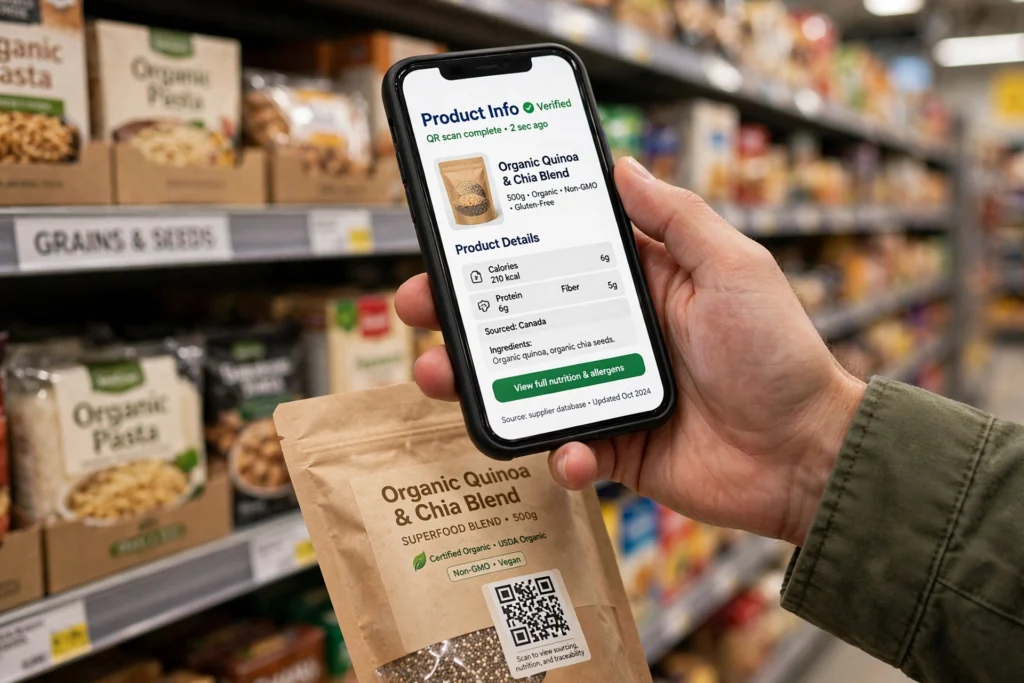
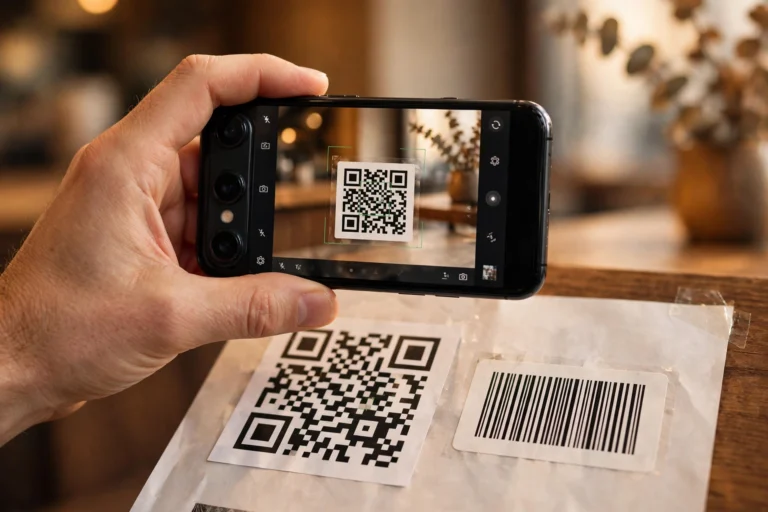
- On a phone, a shopper’s camera app resolves the same address and opens a product page, which can show ingredients, allergens, instructions, recipes, warranty registration, or loyalty offers.
One printed code, and its web destination can be updated later without reprinting the package. That is a major upgrade over a plain barcode, which only carries a number.
Important: a normal QR code that simply links to your homepage does NOT count. The POS side only works when the code uses the GS1-structured URI with a valid, licensed GTIN. The difference between a generic QR and a GS1-grade code is explained further in our guide to how QR codes differ from one-dimensional barcodes. QRCodeStack launched a dedicated GS1 Digital Link QR builder in September 2026 aimed at brands redesigning packaging for the transition, a sign of how fast tooling is maturing.
Do you have to remove your UPC? No, use dual marking
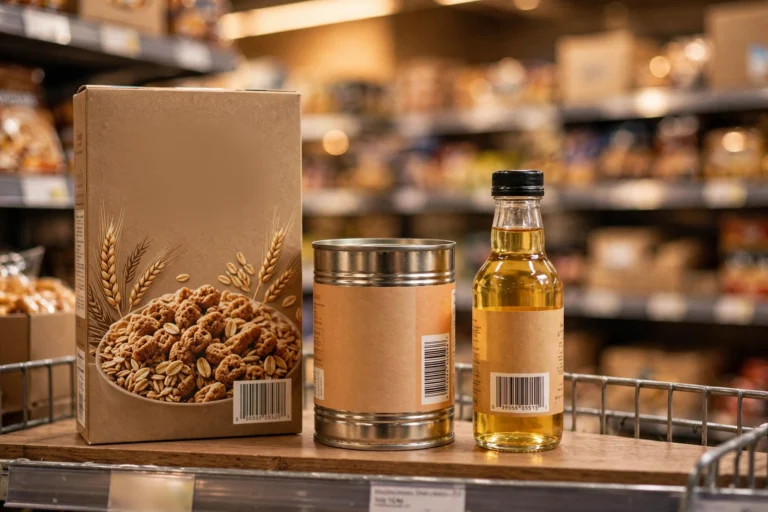
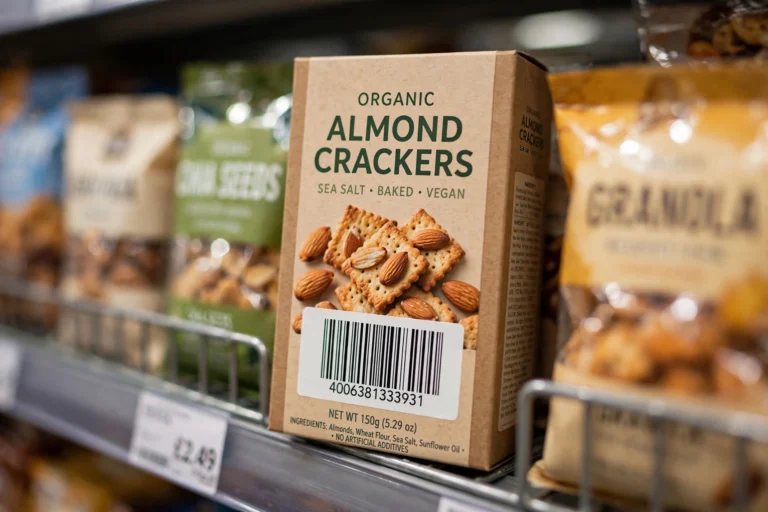
This is the question brands ask most, so here is the direct answer: no. During the transition, GS1 recommends dual marking, printing both the familiar linear barcode (UPC-A, UPC-E, or EAN-13) and the 2D symbol on the same package. Older scanners keep working with the 1D code, and newer scanners read the 2D code.
Dual marking protects you in both directions. If a store’s scanners are not yet upgraded, checkout still works. As stores upgrade, your 2D code starts delivering the extra data: batch, expiry, traceability, and consumer content. Nothing about the deadline forces you to choose one or the other. If you are unsure which UPC or EAN variant your packaging uses, sort that out first, because your GTIN structure feeds directly into your GS1 Digital Link URI.
| 1D barcodes (UPC / EAN) | 2D barcodes (GS1 QR / DataMatrix) | |
|---|---|---|
| Read by | All current laser scanners | Camera-based and upgraded POS scanners |
| Data carried | GTIN only | GTIN plus batch, lot, serial, expiry, web content |
| Consumer use | None | Scan with phone for product info, recipes, warranty |
| After 2027 | Still accepted, no retirement date set | Readable at any upgraded checkout |
| Recommended path | Keep it on the pack | Add it alongside (dual marking) |
Why it matters beyond checkout
The same 2D code that rings up at the till can do a lot more. Because the symbol carries batch, lot, serial, and expiry data in a standard format, it strengthens traceability through recalls and supply-chain audits. For shoppers, a scan can reveal the information that drives purchases. According to a GS1 US consumer survey (2025), via QRCodeStack, 79% of consumers are more likely to buy products with a scannable QR code giving extra product info, and 62% are willing to spend more for them.
Regulation is already pushing this direction. Since December 2023, all wine sold in the EU must carry a QR code showing ingredients and nutrition (the e-label rule), a real-world precedent for QR mandates on packaging.
New to the numbering system? Our guide explains what a GTIN is, the four GTIN formats, and how to get GS1-licensed numbers for your products.
What sellers and brands should do now: a checklist
You do not need to redesign everything overnight, but the clock to December 2027 is real. Work through this checklist in order:
- 1. Confirm your GTINs are licensed and correct. Your GS1 Digital Link URIs are only valid with a real, licensed GTIN. If your UPC/EAN prefixes are not from your GS1 member organisation, fix that first.
- 2. Decide what data the 2D code should carry. At minimum the GTIN. Add batch/lot, serial, and expiry where your products or regulations benefit, for example food, cosmetics, and wine.
- 3. Choose your symbol. GS1 DataMatrix, QR code with GS1 Digital Link syntax, or Data Matrix with GS1 Digital Link syntax are the retail in-scope options. QR is the consumer-friendly choice because phones scan it natively.
- 4. Plan dual marking on your packaging. Keep the existing linear barcode and add the 2D symbol beside it. Confirm print size and quiet zones meet GS1 symbol specifications.
- 5. Set up the web destination. Because the URI resolves online, decide where each GTIN points: product page, traceability portal, or a resolver service. You can update this later without reprinting.
- 6. Test scan both symbols. Verify with a camera-based scanner that the POS side extracts the GTIN and that a phone lands on the right page.
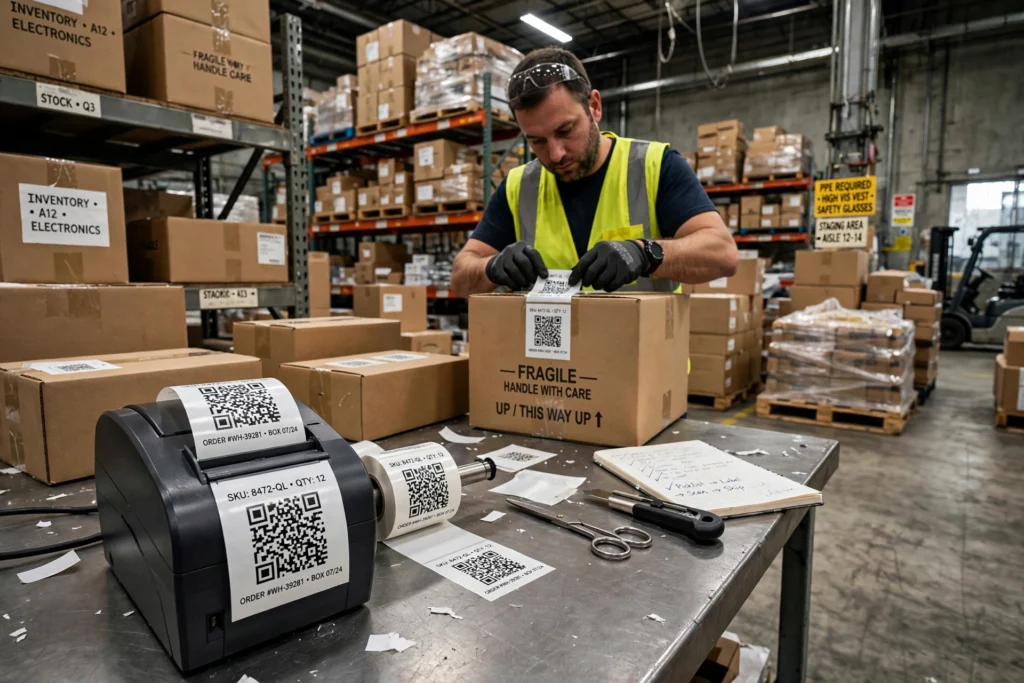
- 7. Generate the codes in bulk. Hand-building URIs for hundreds of SKUs is error-prone. Build your list once, then generate every code in one batch.
How to put 2D codes on packaging in bulk
Most brands facing Sunrise 2027 are not dealing with one product. They are dealing with dozens or hundreds of SKUs, each needing its own GS1 Digital Link URI with the right GTIN, batch fields, and destination. Doing that one by one in a design tool wastes days and invites typos in the very codes your checkout depends on.
The efficient workflow is: keep your product data in a spreadsheet (GTIN, lot, expiry, target URL), then generate every barcode in a single batch. You can turn a spreadsheet of SKUs into printable barcodes without manual copy-paste, which is exactly how larger catalogues should handle the transition. Need the linear side of dual marking covered too? You can create UPC labels in bulk for the 1D symbol on the same packaging run, and make QR codes in large batches for the 2D side.
Generate your 2D barcodes in bulk – free
Frequently asked questions
Is Sunrise 2027 mandatory?
No. Sunrise 2027 is a GS1 industry readiness milestone, not a law or government regulation. The goal is that retail point-of-sale systems can scan and process 2D barcodes by the end of December 2027. GS1 US notes that businesses do not need every 2D capability live by 2027. However, because major retailers are upgrading, brands that add 2D codes now stay ahead instead of scrambling later.
Will 1D barcodes stop working after December 2027?
No. UPC and EAN barcodes continue to be accepted at checkout after 2027, and no retirement date for 1D symbols has been set. GS1 recommends dual marking during the transition: keep your existing linear barcode on the package and add the 2D symbol beside it. Old scanners read the 1D code, upgraded scanners read the 2D code, and your products work everywhere.
Will a normal QR code work at checkout?
No, not a plain one. Checkout works only when the 2D code uses the GS1 Digital Link URI format with a valid, licensed GTIN, so the scanner can extract the product number. A regular QR code that just links to a website will open on a phone but will not ring up at the till. The 2D symbols in scope for retail are GS1 DataMatrix and QR or Data Matrix codes carrying GS1 Digital Link syntax.
What data can a 2D barcode hold?
Far more than a linear barcode. Alongside the GTIN it can carry batch or lot number, serial number, expiry date, and a web address. That means one printed code can serve checkout, traceability, recall management, and consumer content like ingredients, instructions, recipes, warranty registration, and loyalty offers, and the web destination can be updated without reprinting the package.
The bottom line
GS1 Sunrise 2027 asks one thing of the retail industry: be ready to read 2D barcodes by the end of December 2027. It is a capability milestone, not a law and not the end of the 1D barcode. The winning move for brands is dual marking: keep your UPC, add a GS1 Digital Link 2D code beside it, and generate both in bulk from your existing product data. Do that now, and December 2027 becomes a non-event for your business instead of a packaging emergency.
3 Comments