
What Is a GTIN? The Number Behind Every Product Barcode
Wondering what is GTIN? It is the unique number printed under almost every product barcode in the world. GTIN stands for Global Trade Item Number, and it is the reason a scanner in Karachi, London or New York can identify the exact same product without confusion.
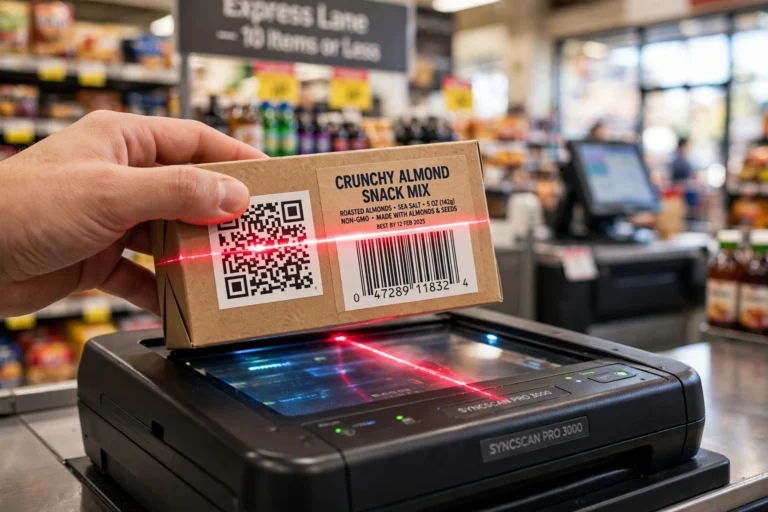
You have seen GTINs thousands of times. That row of digits under the black bars on a cereal box, a shampoo bottle or a shipping carton is a GTIN. The bars are just the machine-readable drawing of that number. The number itself is the identity of the product, and the whole global retail system runs on it.
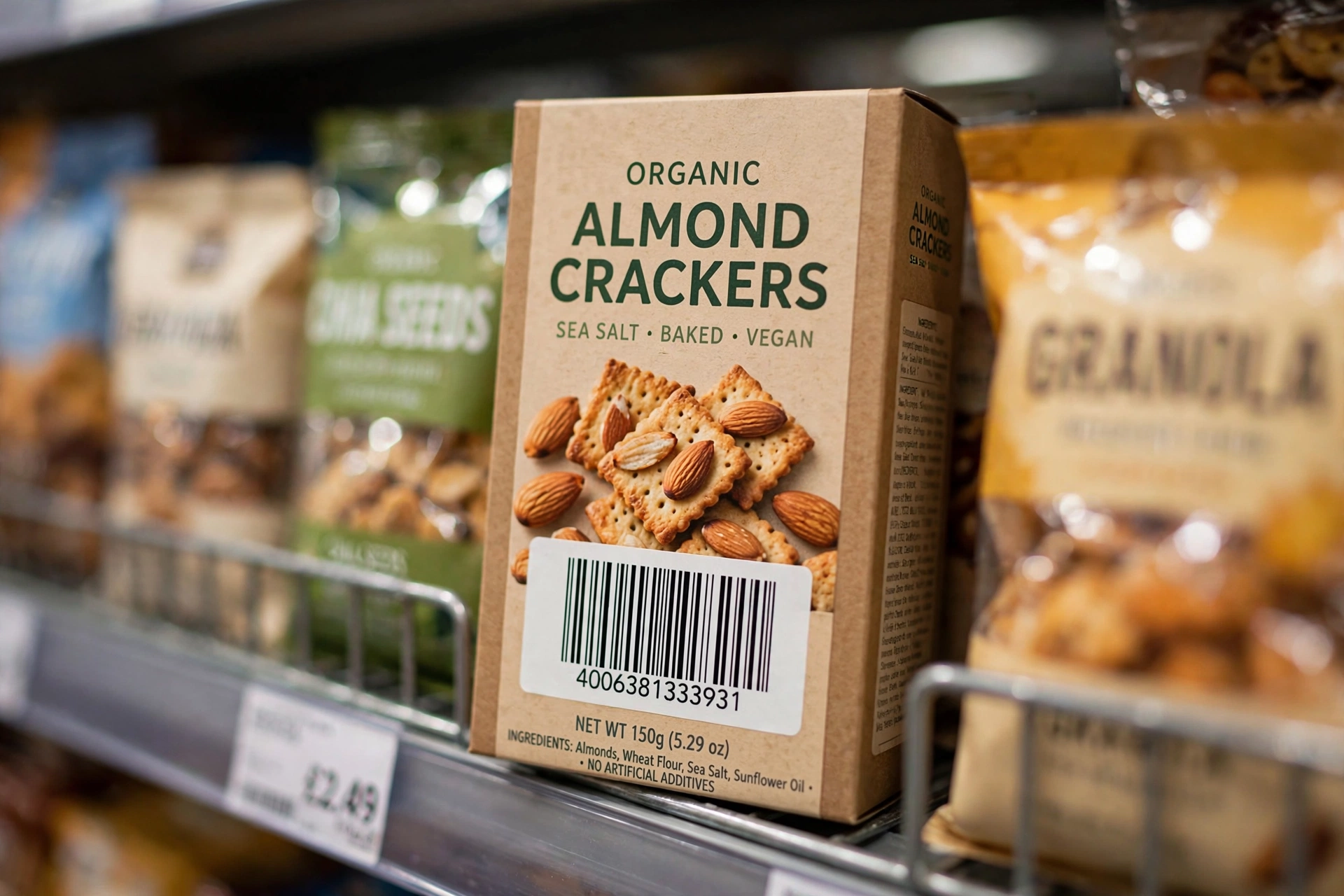
GTIN full form and what it means
GTIN is short for Global Trade Item Number. A “trade item” is anything that is priced, ordered or invoiced at any point in the supply chain: a single chocolate bar, a six-pack of that bar, or the carton of 48 six-packs in the warehouse.
Three facts define the system:
- One GTIN = one trade item, worldwide. The number is unique across every retailer, marketplace and country. When a warehouse in Germany scans your box, its system already knows exactly what it is looking at.
- GS1 runs the system. GTINs are issued and managed by GS1, a not-for-profit standards body with a network of around 120 member organisations covering about 150 countries. Your local GS1 office licenses the numbers to you.
- The number carries structure. The digits are not random. The beginning identifies the GS1 member organisation and the company (for example, numbers starting with 890 were issued in India), the middle identifies the product, and the last digit is a check digit that catches scanning errors.
The 4 GTIN formats: 8, 12, 13 and 14
There are four GTIN formats. The right one depends on where the product is sold and how big the packaging is.
| Format | Digits | Barcode it travels in | Used for |
|---|---|---|---|
| GTIN-12 | 12 | UPC-A | Retail products in North America |
| GTIN-13 | 13 | EAN-13 | Retail products sold worldwide |
| GTIN-8 | 8 | EAN-8 | Very small products where a full barcode will not fit |
| GTIN-14 | 14 | ITF-14 | Shipping cartons and cases, never at the checkout |
A few practical notes on each:
- GTIN-13 (EAN-13) is the most common format on the planet. If you sell retail products outside North America, this is almost certainly your format. Read our EAN-13 explained guide for the full breakdown, or generate them directly with our EAN-13 barcode generator.
- GTIN-12 (UPC-A) is the North American retail standard. The two formats are cousins: a GTIN-12 is just a GTIN-13 with a leading zero, which is why American products scan fine abroad. Our UPC barcode generator creates them in bulk.
- GTIN-8 is reserved for tiny items like chewing-gum sticks or small cosmetics. Because only 8 digits exist, the supply is limited and these numbers are issued directly by GS1, not through the normal company-prefix route.
- GTIN-14 (ITF-14) identifies the shipping carton, not the product inside it. It is printed on corrugated cardboard and scanned in warehouses, never at a retail till. Our ITF-14 barcode generator makes them from a list or spreadsheet.
One detail that surprises people: computer systems store every GTIN as 14 digits. Shorter GTINs are simply padded with leading zeros, so a GTIN-12 like 036000291452 becomes 00036000291452 in a database. Same number, same product.
The last digit of every GTIN is a check digit, calculated from the other digits with the GS1 Modulo 10 algorithm. Scanners verify it on every read, which is how they catch misprints instantly. You can verify any number yourself with our free check digit calculator.
GTIN vs barcode: what is the difference?
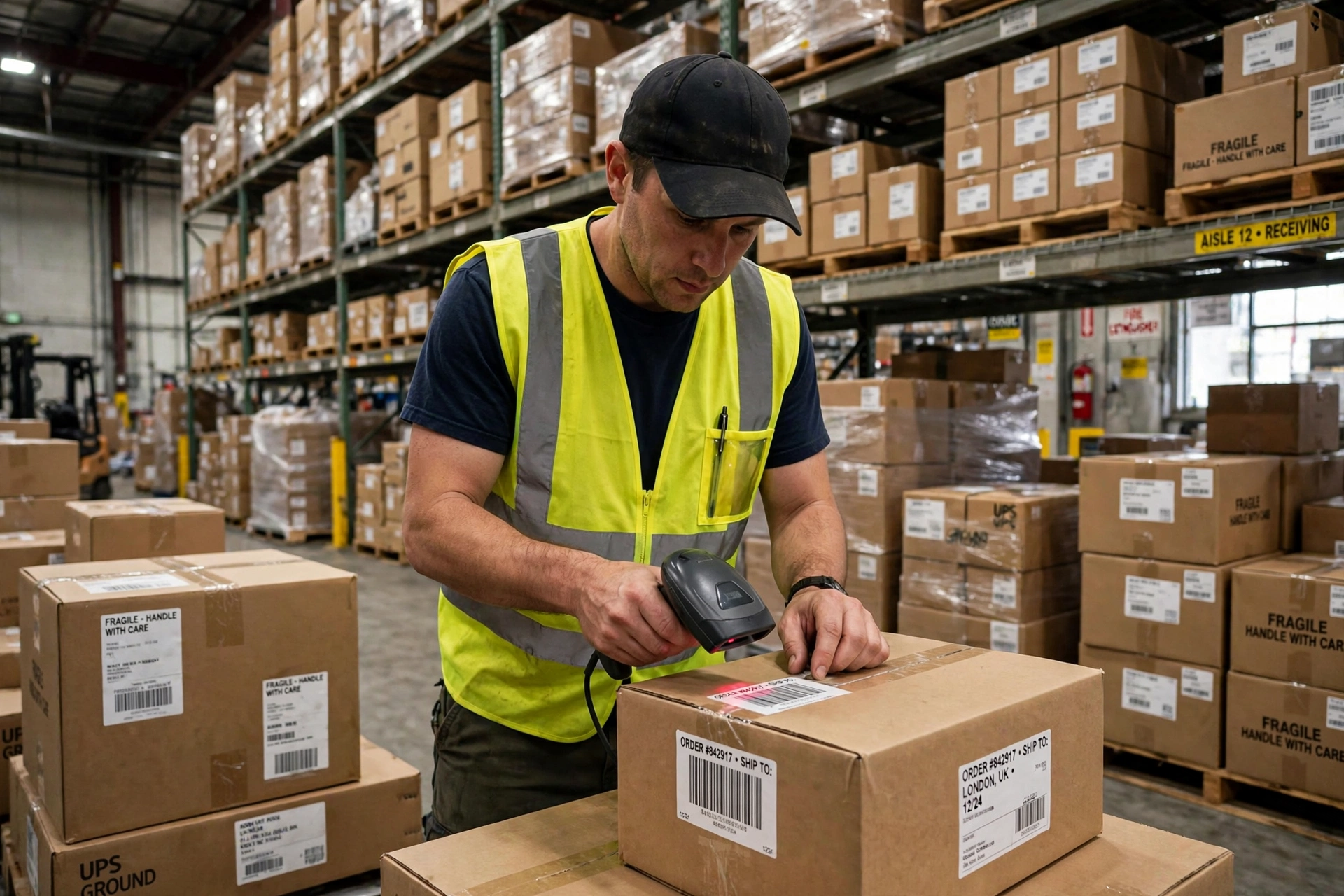
This is the most common point of confusion, so let us settle it: the GTIN is the number, the barcode is the drawing.
Think of it like a person and their photograph. The GTIN is the identity (the number). The barcode (UPC-A, EAN-13, ITF-14) is the printed carrier that makes the number scannable. UPC and EAN are not separate numbering systems competing with GTIN; they are barcode formats that carry GTINs.
That is why the same GTIN can appear in different carriers. A product’s GTIN-13 prints as an EAN-13 symbol on the retail box, while the case of 24 boxes carries a GTIN-14 printed as an ITF-14 symbol on the carton. Two different barcodes, one product family, and the GTIN system keeps them linked.
It also explains why a barcode can be reprinted without changing anything fundamental. Lose the label, print a new one from the same number, and every scanner in the world still recognises the product. The identity lives in the number, not the ink.
One product, many GTINs: packaging levels
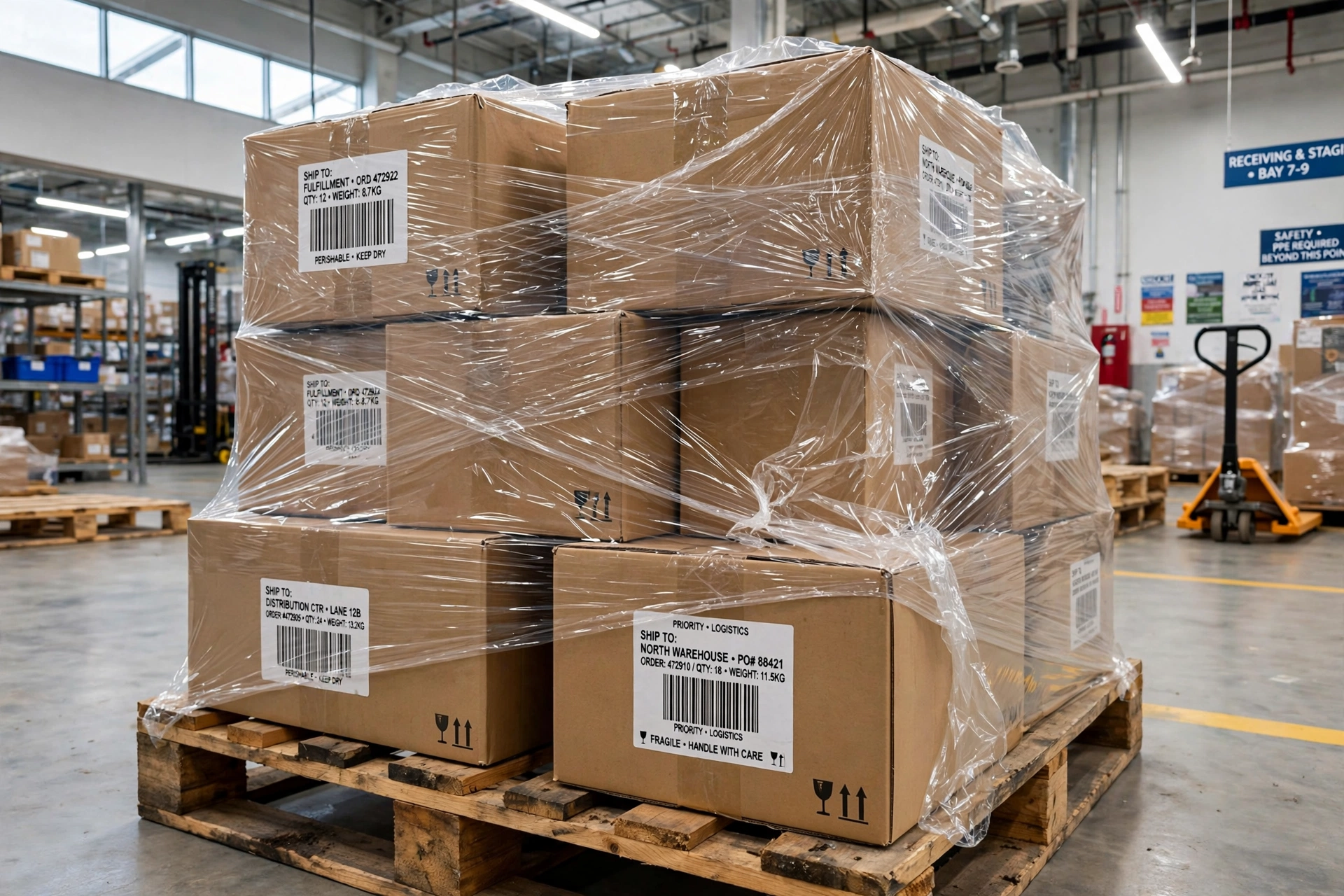
Here is a rule that trips up new sellers: every packaging level needs its own GTIN. The single shampoo bottle, the pack of six, and the shipping case of 48 six-packs are three different trade items, so they get three different GTINs.
The carton GTIN (GTIN-14) is built from the retail GTIN with an extra packaging-level digit at the front. This is how a distribution centre knows that the carton it just scanned contains 48 units of exactly the shampoo on the purchase order, not 48 units of something else.
Reusing one GTIN across packaging levels causes real chaos: the checkout till cannot tell whether it just scanned a single bottle or a whole case. GS1 is explicit that discontinued products’ numbers should not be casually recycled either, because old catalogue data lingers in retailer systems for years.
Where do GTINs come from? (GS1)
You get GTINs by licensing them from a GS1 member organisation in your country. You pay a fee based on how many numbers you need, receive a company prefix, and then assign GTINs to your products yourself.
Now the honest part, because this matters: a free barcode generator can print a scannable GTIN-format code, but it cannot register that number with GS1. The printed bars will scan perfectly, but the number will not exist in any retailer’s database.
That distinction decides which route you take:
- Selling on Amazon, Flipkart or in retail chains? Get GS1-issued GTINs. Marketplaces validate numbers against GS1 data, and listings with unregistered numbers get blocked. Our guide to barcodes for Amazon walks through the seller requirements.
- Internal use (inventory, warehouse, asset tracking)? A generated code is completely fine. Your own scanners only need the codes to be unique inside your system. Generate them in bulk with our free tools and print them yourself.
How to create GTIN barcodes in bulk
Once you have your numbers, turning them into printed barcodes is the easy part. Our free bulk barcode generator creates up to 500 barcodes at once from a list or an Excel/CSV file, with no signup and no watermark:
- GTIN-13 barcodes with the EAN-13 barcode generator (retail products)
- GTIN-12 barcodes with the UPC barcode generator (North America retail)
- GTIN-14 barcodes with the ITF-14 barcode generator (shipping cartons)
- Internal codes with the Code 128 barcode generator (warehouse and asset labels)
Upload your spreadsheet, pick the format, and download print-ready PNG or PDF files. The full walkthrough is in our guide to generating barcodes from Excel and CSV. If you already have printed numbers and want to check them, scan one with our barcode decoder to see the exact GTIN inside.
GTIN vs SKU vs MPN
Three identifiers get mixed up constantly. Here is the clean separation:
| Identifier | Who assigns it | Scope |
|---|---|---|
| GTIN | GS1 (licensed) | Universal: every retailer and marketplace on earth |
| SKU | The retailer | Internal: unique only inside one store or chain |
| MPN | The manufacturer | Company-wide: unique inside one manufacturer’s catalogue |
A manufacturer assigns an MPN, licenses a GTIN from GS1, and each retailer that stocks the product assigns its own SKU. The GTIN is the only one of the three that works everywhere, which is exactly why marketplaces demand it.
How to check a GTIN is valid
Two quick checks catch almost every bad GTIN before it reaches a printer:
- Length and digits. A GTIN is 8, 12, 13 or 14 digits, nothing else. Letters, spaces or dashes mean the data was copied wrong.
- Check digit. Run the number through our check digit calculator. It applies the GS1 Modulo 10 algorithm and tells you instantly whether the final digit is correct.
If a code will not scan after printing, the number is rarely the problem. Low contrast, wrong sizing and damaged labels cause most failures, as we covered in our guide to barcodes that will not scan.
GTINs in 2D codes and the future
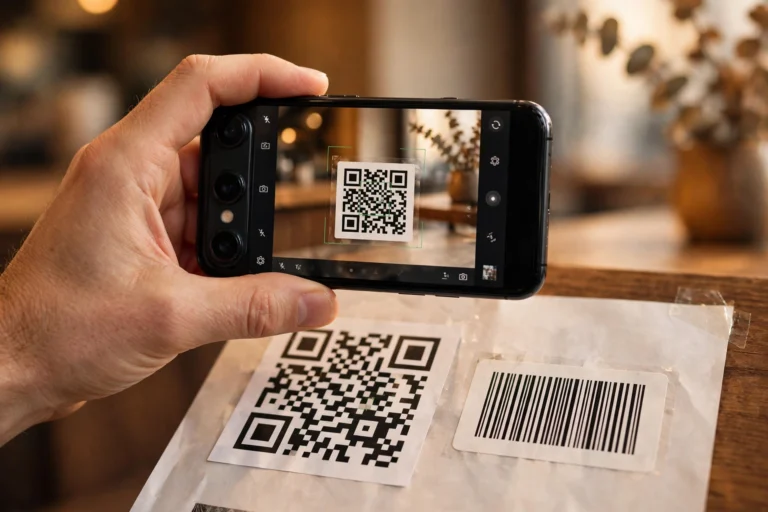
GTINs are not limited to the classic black bars. The same numbers now travel inside GS1 DataMatrix codes and QR codes carrying GS1 Digital Link data, which can hold the GTIN plus expiry dates, batch numbers and serial numbers in one symbol.
That is the direction retail is heading. GS1’s Sunrise 2027 initiative is preparing point-of-sale systems to read these 2D codes alongside traditional barcodes, and our Sunrise 2027 guide explains the timeline. The GTIN itself is not changing; it is simply getting new carriers. Learn the number system once, and you are ready for both.
What is the full form of GTIN?
GTIN stands for Global Trade Item Number. It is the unique identification number assigned to a trade item (a product or service that is priced, ordered or invoiced), issued under the GS1 system.
Is a GTIN the same as a barcode?
No. The GTIN is the number; the barcode (UPC-A, EAN-13, ITF-14) is the printed carrier that makes the number scannable. One GTIN can appear in different barcode formats.
How many digits is a GTIN?
A GTIN has 8, 12, 13 or 14 digits depending on the format: GTIN-8, GTIN-12 (UPC-A), GTIN-13 (EAN-13) or GTIN-14 (ITF-14). Databases store all of them as 14 digits with leading zeros.
How do I get a GTIN for my product?
License GTINs from a GS1 member organisation in your country. Free barcode generators can print scannable GTIN-format codes for internal use, but retailers and marketplaces like Amazon require GS1-registered numbers.
What is the difference between GTIN-12 and GTIN-13?
GTIN-12 is the 12-digit number carried by UPC-A barcodes, the North American retail standard. GTIN-13 is the 13-digit number carried by EAN-13 barcodes, used for retail products worldwide. A GTIN-12 is equivalent to a GTIN-13 with a leading zero.
Can I use the same GTIN on different packaging sizes?
No. Each packaging level (single item, multipack, shipping case) is a different trade item and needs its own GTIN. The carton uses a GTIN-14 derived from the retail GTIN.
The bottom line
So, what is GTIN in one sentence? It is the Global Trade Item Number: the unique, GS1-managed identity printed under every product barcode, in four formats (8, 12, 13, 14) that cover everything from a chewing-gum stick to a shipping pallet.
If you sell products, get your numbers from GS1, then generate the barcodes free with our bulk tools. And if you want to see where the whole system is heading next, read our GS1 Sunrise 2027 guide on the move to 2D codes at checkout.


5 Comments